The psychology of stamp cards: why a head start brings customers back
A famous car wash experiment showed that a pre-stamped card is completed almost twice as often. Here's what the endowed progress effect means for your café.
· 2 min read · Tapstand team
In 2004, two marketing researchers, Joseph Nunes and Xavier Drèze, handed out 300 loyalty cards at a car wash. Half the cards needed 8 stamps for a free wash. The other half needed 10 stamps, but came with 2 already stamped. Both groups needed exactly eight more washes. Only the framing was different.
The head-start group also came back faster as they got closer to the reward. The researchers called this the endowed progress effect: when people feel they've already started, they're more likely to finish.
Why it works
- Starting is the hardest part. A card with zero stamps is a task you haven't begun. A card with one or two is a task you're in the middle of.
- The goal gradient. People speed up as a goal gets closer. The closer the card looks to full, the stronger the pull.
- Loss aversion. Abandoning a card with stamps on it feels like throwing something away.
The catch: the head start needs a reason
Later work found the effect weakens when the free progress feels arbitrary. Give a reason: "Your first stamp's on us for joining" or "Two stamps for signing up this week". The stamps should feel earned, not handed out.
How to use it at your café
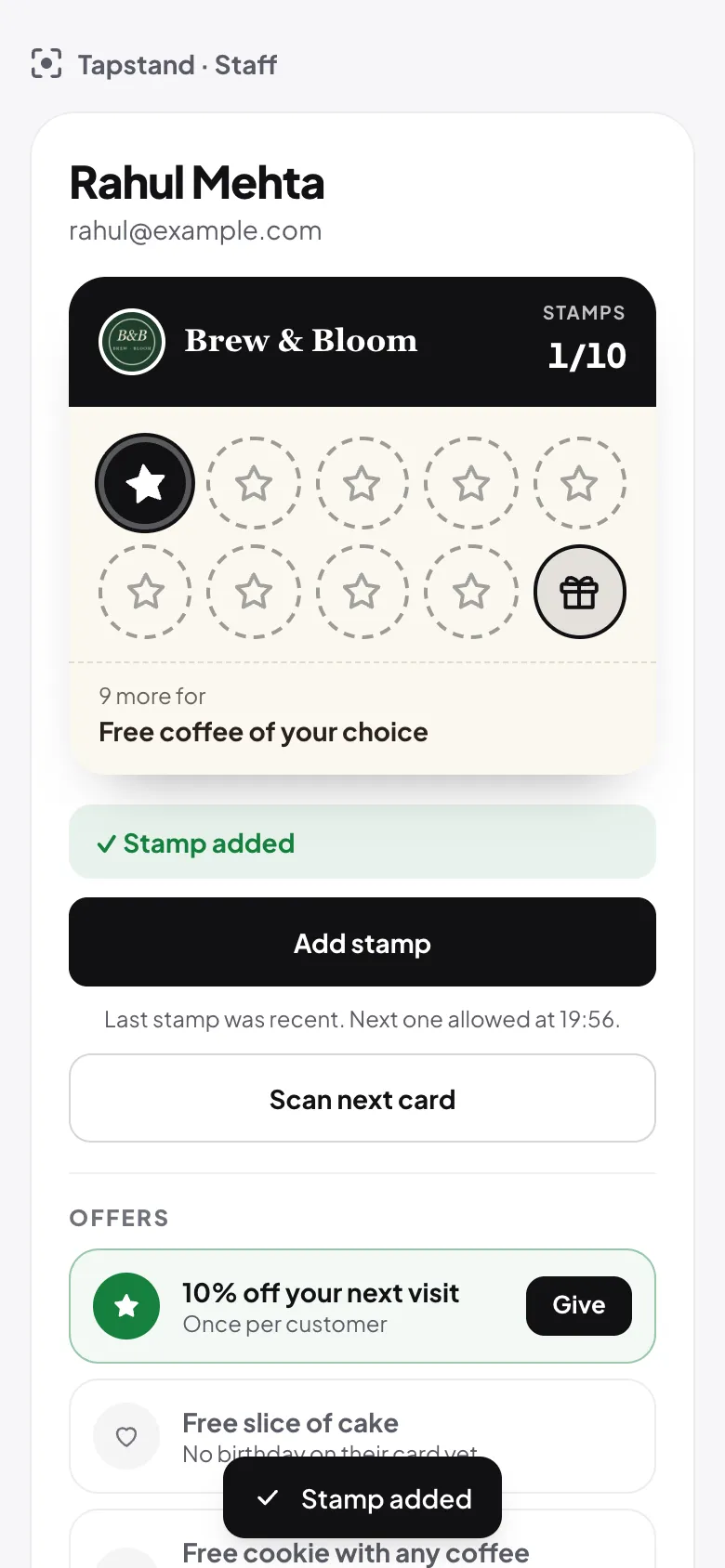
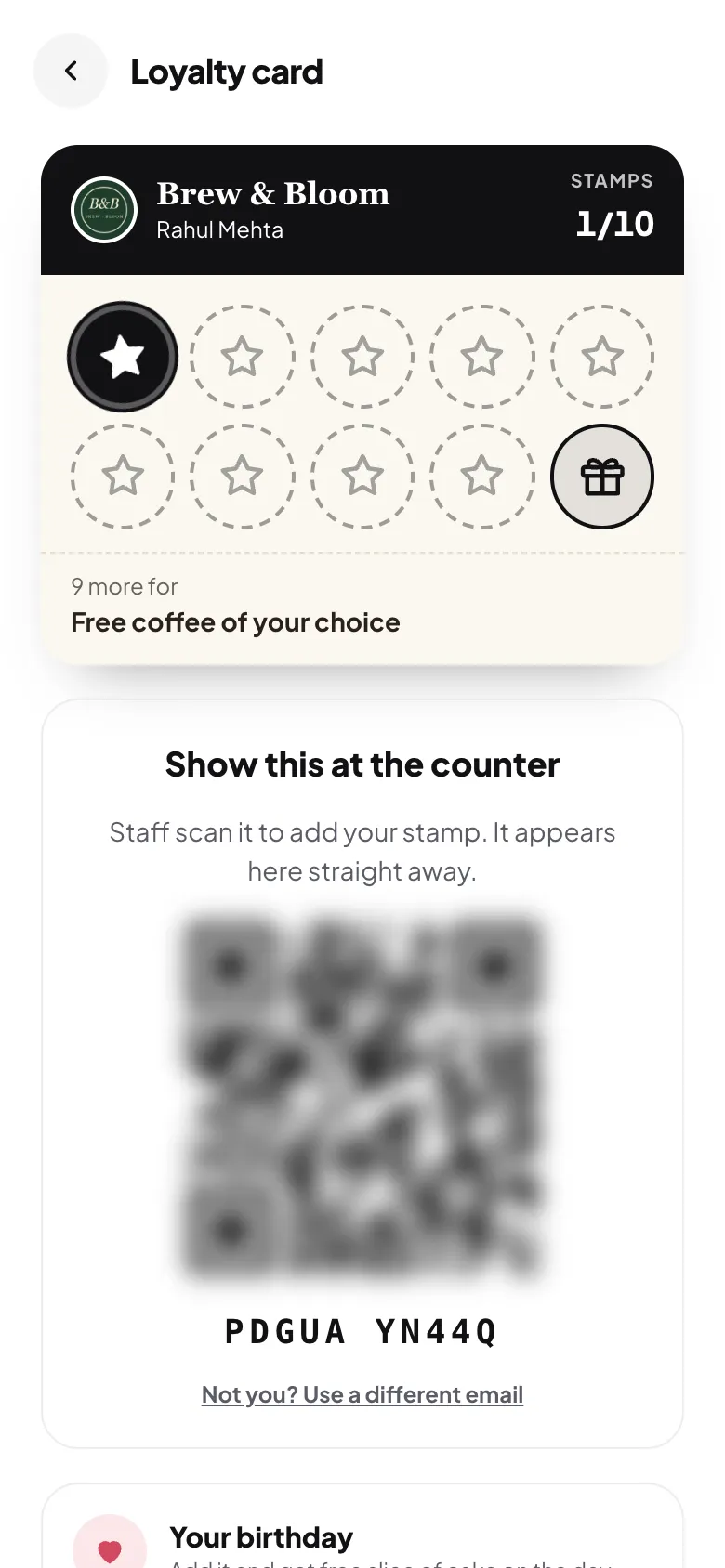
- Stamp on the day they join. Ask staff to stamp the card straight after sign-up, with a line like "here's your first one".
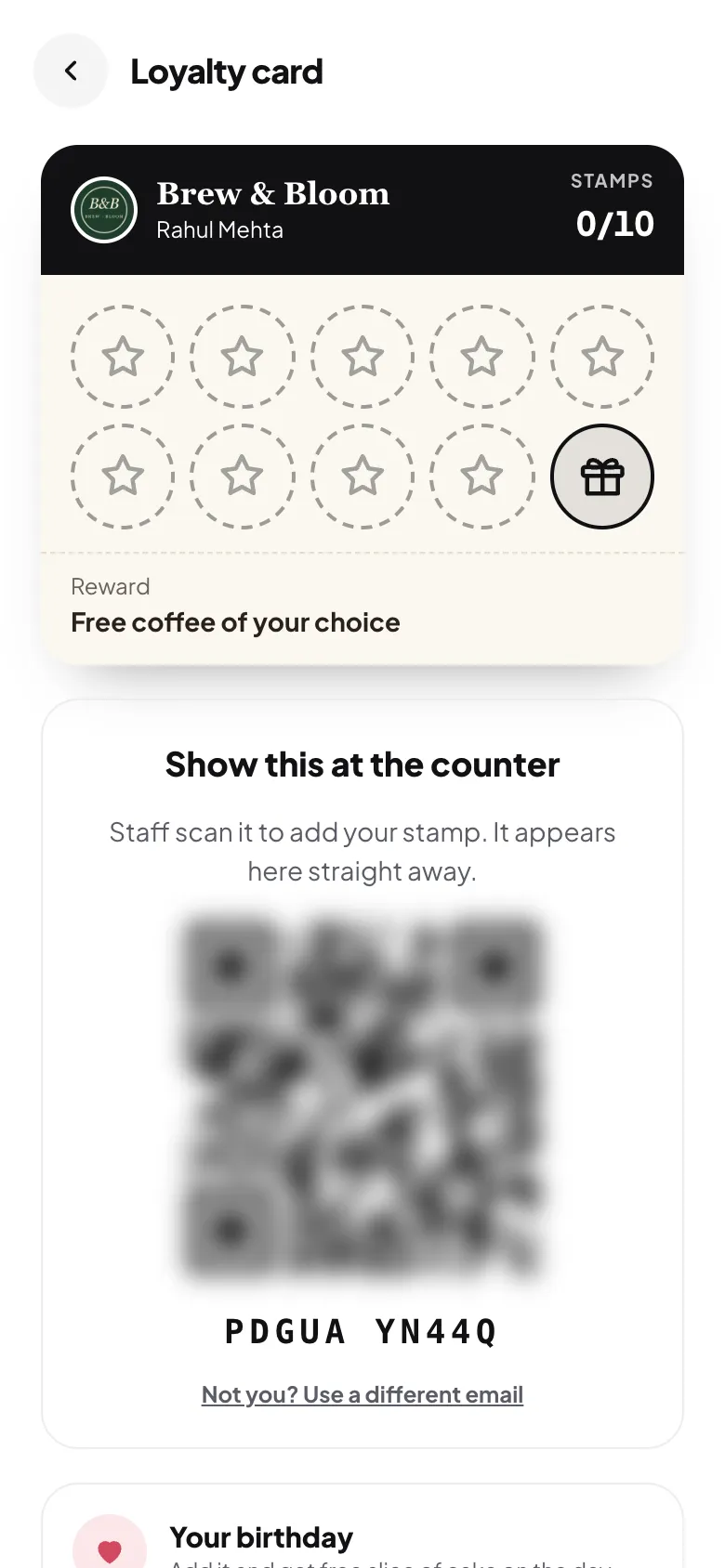
- Show progress clearly. "9 more for a free coffee" beats a row of empty circles. A digital card can say it in words.
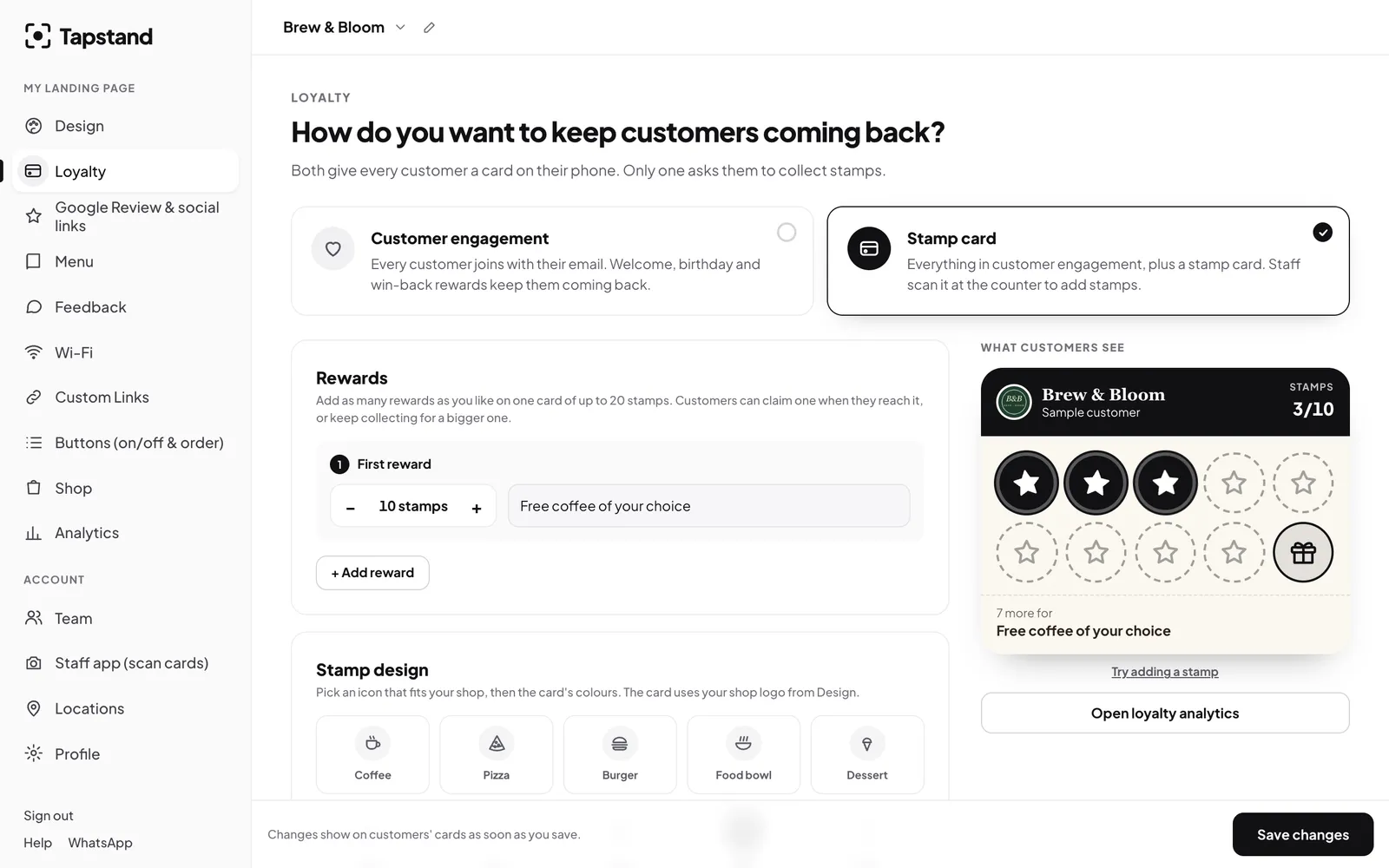
- Use small early rewards. A tier at five stamps gives a second head start once the first reward is claimed.
- Don't reset to zero awkwardly. When a card fills, let the reward be saved for later so the guest never feels they lost something.

Sources
Screenshots show Tapstand with a sample café and demo data.